The defect rate you're not measuring
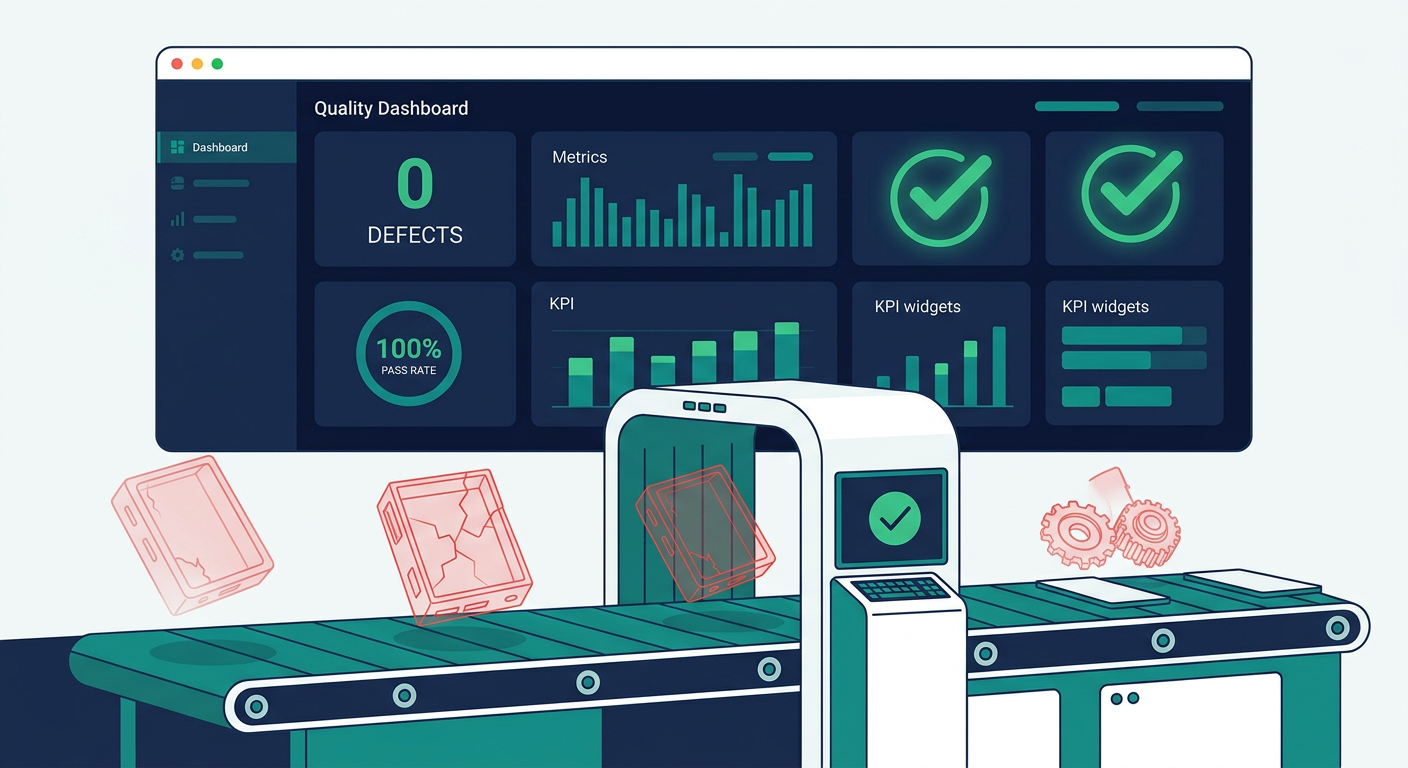
Your quality dashboard says 99% detection rate. That number is probably true -- and almost certainly misleading.
The distinction that matters: your inspection system is detecting 99% of known defects, not 99% of actual defects. The gap between those two figures is where your real quality risk lives.
What "defect detection" actually measures in most factories
When manufacturers talk about defect detection, they're typically describing the performance of rule-based vision systems -- machines programmed to look for specific patterns that engineers catalogued at installation. A scratch of a certain depth. A weld gap above a defined threshold. A color deviation beyond a set tolerance.
These systems are precise within their parameters. They reliably catch what they were told to look for. But manufacturing reality is not static. Products evolve. Materials shift between suppliers. Environmental conditions change. And defects -- real, production-line defects -- don't confine themselves to the categories someone wrote down two years ago.
The question worth sitting with: if a system can only see what it expected to see, what's slipping past?
The invisible defect problem
Rule-based inspection has a structural blind spot: irregular, atypical anomalies. Surface variations that don't match a pre-programmed template. Micro-deformations that are genuinely novel. Subsurface inconsistencies that manifest differently than any prior defect type.
These pass through undetected -- not because they're subtle, but because no rule exists to catch them.
This is the defect rate you're not measuring -- not the detected-versus-missed ratio for known defect types, but the gap between your catalogued defect universe and the actual defect universe your production line generates.
Why this gap grows over time
Rule-based systems are snapshots. They encode the state of knowledge at a single point in time. Every change after that -- new materials, new suppliers, process drift, tooling wear, seasonal humidity shifts -- introduces new failure modes the system was never programmed to recognize.
The longer a rule-based system runs without fundamental redesign, the wider this gap typically becomes. Yet the detection rate metric never reflects it.
How AI inspection changes the framework
AI-based defect detection approaches the problem differently. Rather than encoding specific defect templates, systems like HyperQ AI Vision learn what "normal" looks like across thousands of production samples -- and flag deviations from that learned baseline, regardless of whether those deviations match any pre-existing category.
HyperQ AI Vision doesn't require engineers to anticipate every possible failure mode before the system goes live. Novel anomalies -- the ones that don't fit the template -- are what the system is built to surface.
And critically: HyperQ AI Vision doesn't just detect -- it qualifies. It determines whether a surface variation is acceptable or unacceptable against your specific quality standard. Detection coverage extends across both known and unknown defect types.
The right question for your quality review
If you're evaluating your current inspection performance, the most important question isn't "what is our detection rate?" It's "what is our detection rate, and what is it being measured against?"
A 99% detection rate against a two-year-old defect catalogue is a very different number than 99% against your current production reality.
The defect rate that should be on your dashboard
Detection rate against known types is a useful operational metric. But it only tells half the story. The harder question: what are you not catching that you don't know you're missing?
That answer isn't visible in your current dashboard. It shows up in your field returns, your warranty data, and your customer complaints -- after it's already too late.
AI Vision inspection moves that visibility upstream. The 99% that matters is the one measured against defects that don't exist in any rulebook yet.
Explore our solutions or speak with a Hypernology engineer to scope your first deployment.